

🌍 MACRO
The one thing that matters: Hormuz
Everything runs through one chain right now: Middle East → oil → inflation → rates → risk assets.
That’s the whole story. Higher oil means higher inflation expectations, which means higher rates, which is bad for anything that depends on borrowing or on far-away future profits.
The Fed raised rates 25bps to 3.75–4.00% on Wednesday. Not a surprise — the vote was 12-0 and it was priced. The real news was the dot plot: 16 of 18 officials expect another hike, and markets now put October at 55% odds and December at 90%.
The good news: nothing is broken underneath
Credit is wide open. When something is truly wrong, credit moves first. It hasn’t yet.
No recession in sight. Jobless claims came in at 196,000, very low. Retail sales rose 1.2% against a 0.8% forecast. GDP is tracking around 2.6% for Q4.
Inflation may be less bad than the Fed thinks. Truflation is running near 2.4–2.5% with no acceleration. The Fed projects headline PCE at 3.7%. That’s a big gap, and it leaves room for a positive surprise.
Here’s why it matters: the market is now priced for a more hawkish Fed. If inflation stays quiet, the Fed doesn’t need to act again, and that opens a window for a proper rally. But it takes weeks, not days.
The thin line
Trump meets Gulf leaders next week. That’s a real chance of a positive surprise: calm the region, oil falls, the 10-year falls, pressure lifts. The opposite is equally possible.
So we sit between two very different outcomes. Not a moment to make big bets either way.
📊 INDEX
The indices are still in an uptrend
The S&P closed at 7,650, about 2% off its high, above a rising 20-week average. Nasdaq is similar.
The problem is underneath. Only about 40% of US stocks are above their combined 50/150/200-day averages, the weakest since early April.
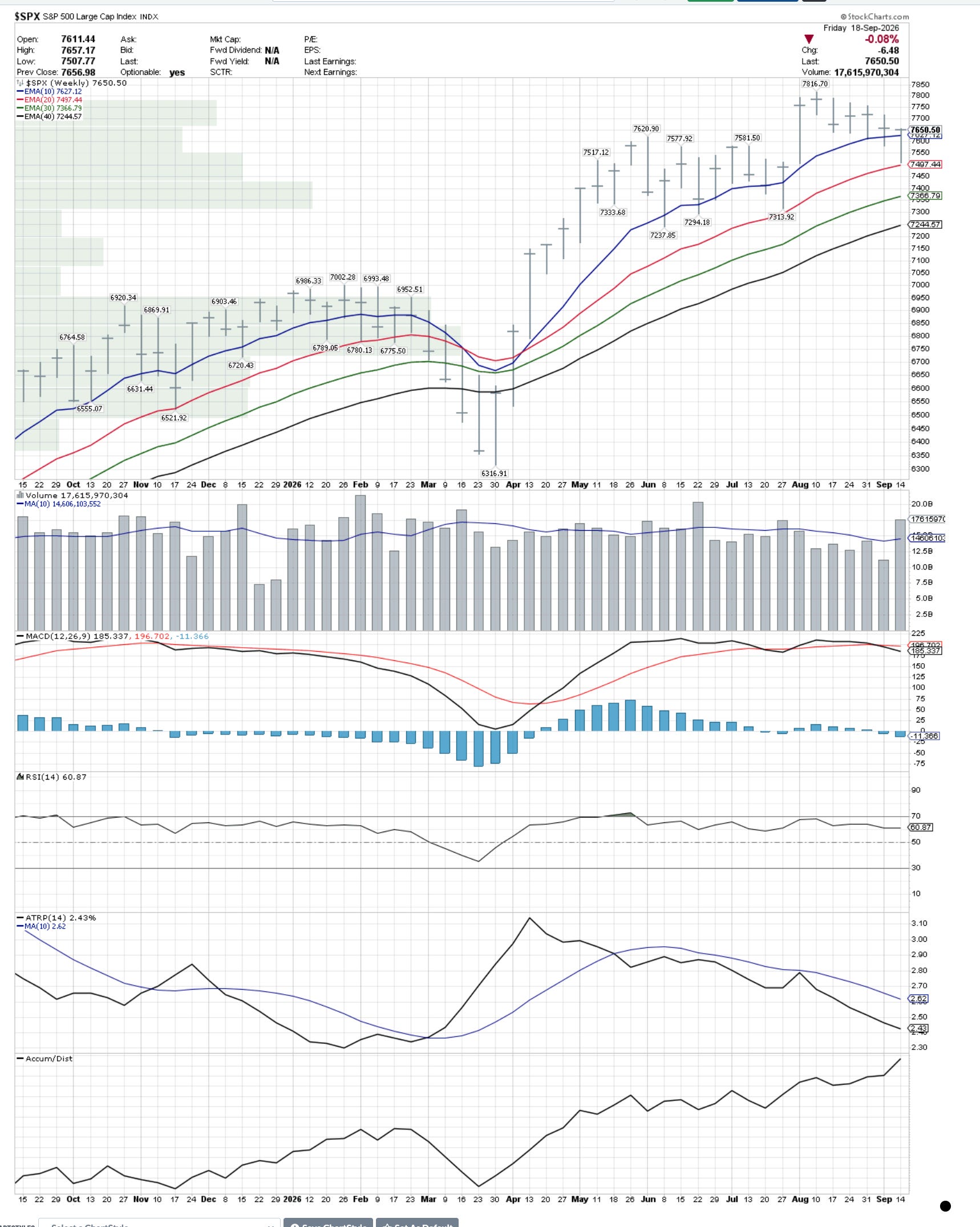
Worth noting: volatility is very low (VIX near 15) while breadth is weak and sentiment is in fear. That usually resolves with a burst of volatility. I don’t know the direction.
Sectors: technology, and not much else
Technology is the only genuinely strong sector — but there’s a rotation inside it, out of capital-intensive tech and into capital-light tech. Cybersecurity (+12% on the week as a group), cloud and software are winning. Semiconductors (−13% over three months), nuclear, infrastructure and solar are losing. It makes sense: when money costs 5%, businesses that must build and finance things get punished, while businesses that generate cash and sit on it don’t.
Energy is a hostage. Best sector over three months at +19.6%, but slipping on the week. It’s not an energy call anymore, it’s a Hormuz call.
Healthcare is quietly improving — best sector this week, +12.7% over three months, defensive and not rate-sensitive.
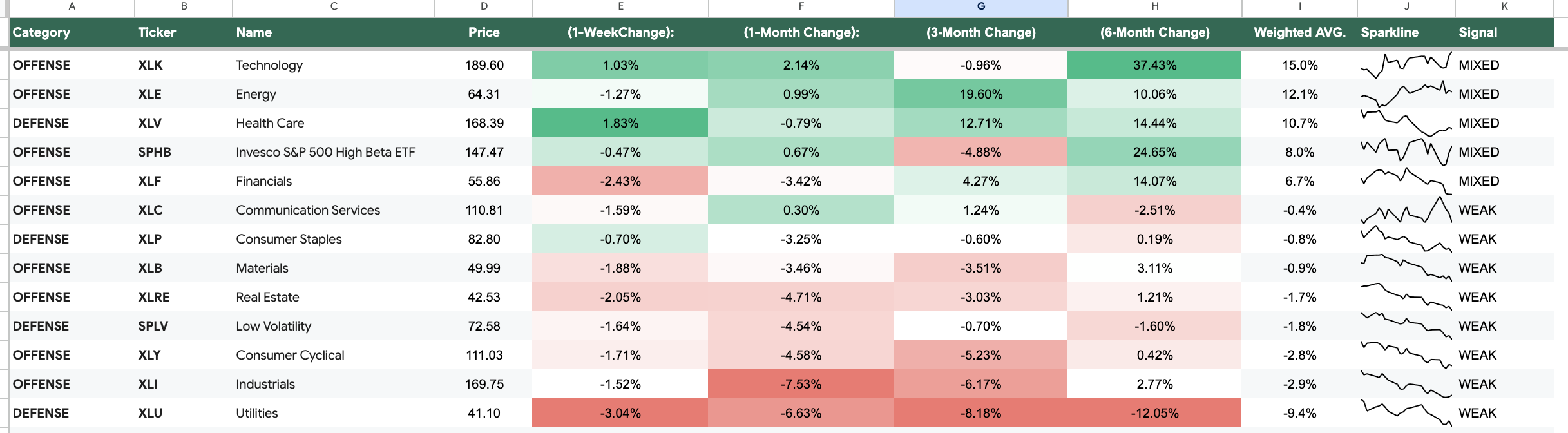
Everything else is mixed or weak. Note which things are weak: utilities, real estate, homebuilders, small caps. All rate-sensitive. Defensives are getting hit too, so this isn’t classic risk-off. It’s a rate shock.
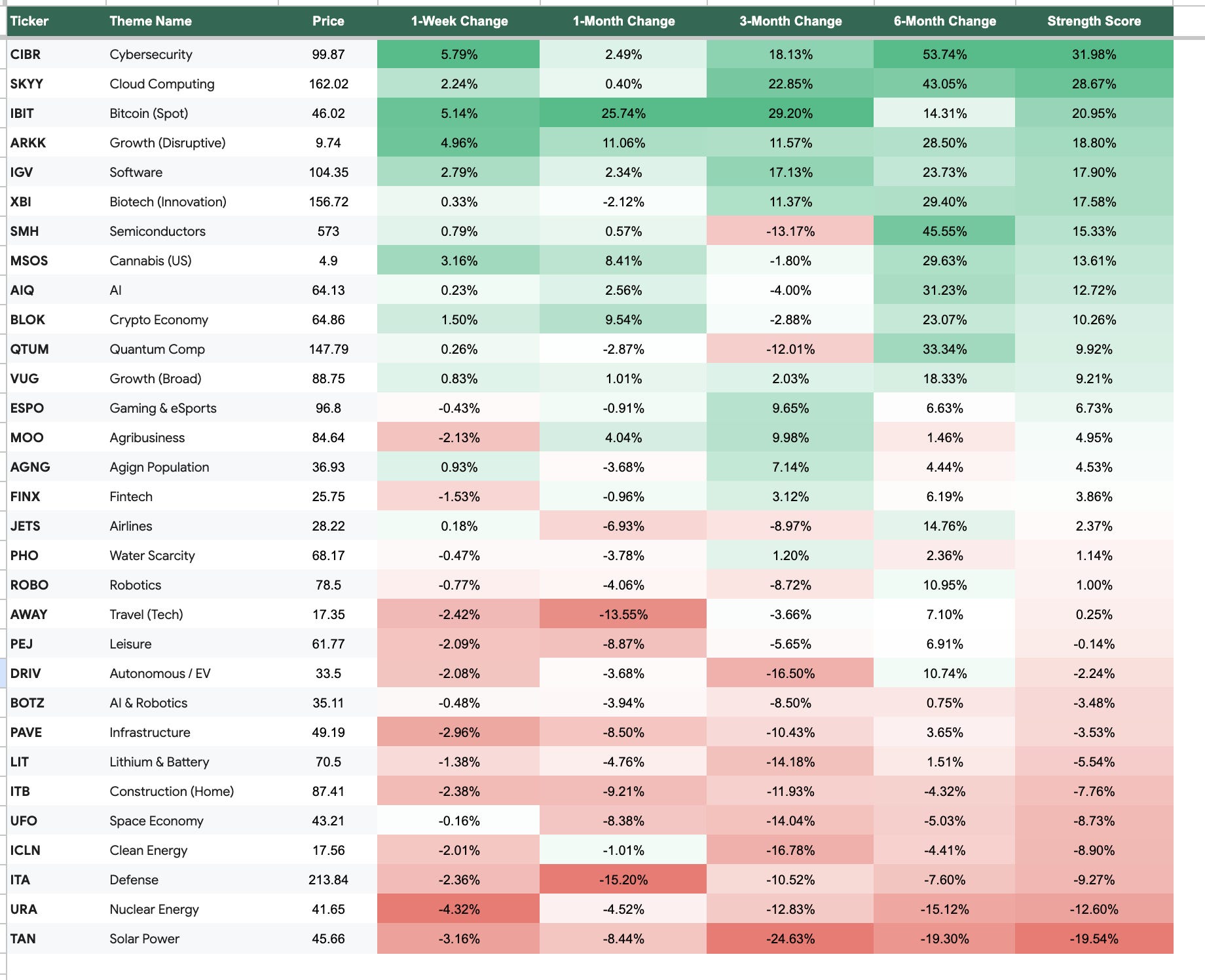
The exception is bitcoin, up about 26% in a month, rising while rates rise. I read it as an alternative to a dollar facing stronger inflation and a growing debt pile.
All in all: time to do little, and stay flexible.
Cash isn’t a wasted position right now, it’s optionality. If the Gulf meeting goes well or inflation comes in soft, I want room to act. If oil spikes and the 10-year breaks 5%, I want to be glad I didn’t add.
Do little. Stay ready.
💼 PORTFOLIOS
10X MOMENTUM
I was stopped out of two positions this week:
RYTM, sold 15 September for a 12.6% loss
INR, sold 16 September for a 13.6% loss (only half a position, luckily)
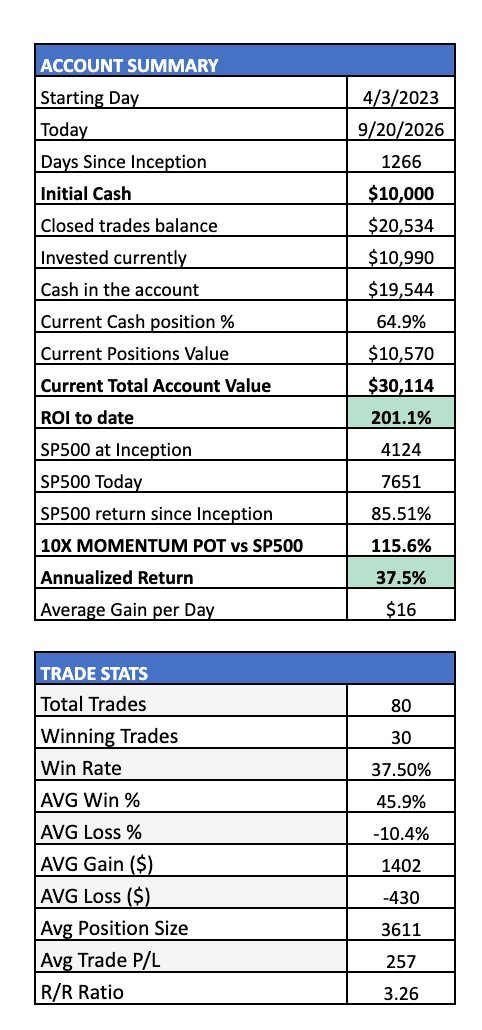
Below is how the portfolio looks today. This is not a market for swing traders.

10X EASY DOUBLES
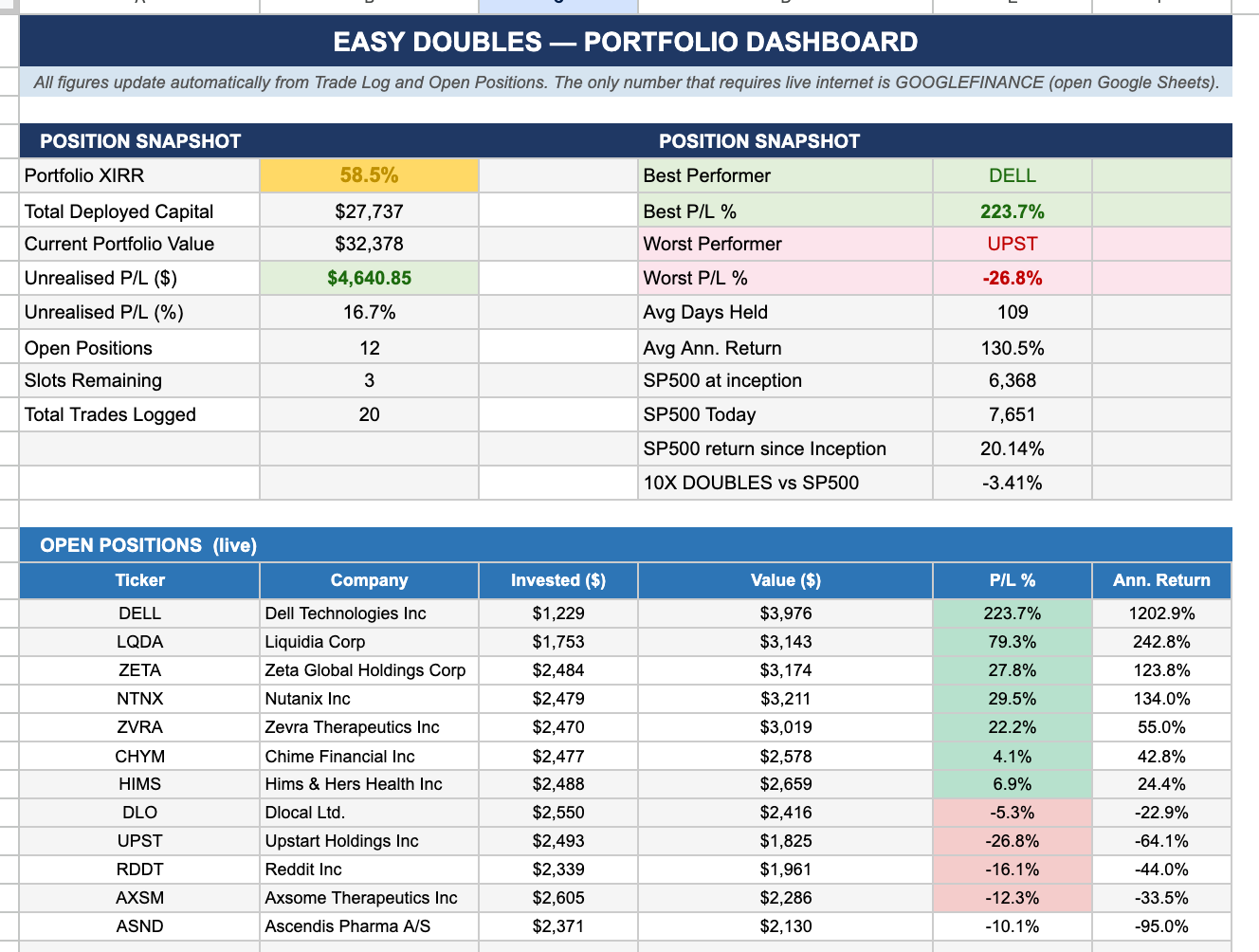
I sold LEGN at $17.60, as it closed below $18.50 last Friday. I did not sell UPST because it held the $25 mark. I’ll check it again at Friday’s close: if it’s below $25, I close the position.
No new stocks added this week. Below is the portfolio as it stands.
That’s all for today! Let’s see what next week will bring us!
Important: This is not investment advice. Please consult a licensed financial advisor before making any investment decisions. AI tools used for editing.